Basset Hound
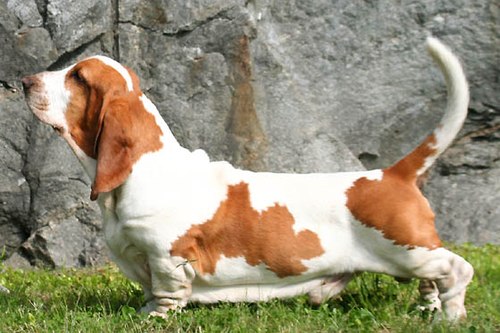
Height28–38 cm (11–15 in)
Weight20–29 kg (44–64 lbs)
TypeHound
Life Expectancy10–12 yrs
OriginFrance
Droopy-eyed, long-eared, and impossibly charming, the Basset Hound is a low-key companion with one of the best noses in the dog world. They are patient, gentle, and stubbornly lovable.
Breed Ratings
Personality
Intelligence
3/5
Trainability
2/5
Playfulness
3/5
Energy Level
2/5
Social
Good with Kids
5/5
Good with Dogs
5/5
Good with Strangers
4/5
Lifestyle
Apartment Friendly
3/5
Exercise Needs
2/5
Watchdog Ability
2/5
Barking Level
4/5
Care
Shedding
3/5
Grooming Needs
2/5
Health Robustness
3/5
Where Are Basset Hounds From?
Basset Hounds were developed in France by monks at the Abbey of Saint-Hubert who wanted a slow-moving scent hound that hunters could follow on foot rather than horseback. The name comes from the French word “bas,” meaning low. Their short legs were deliberately bred to keep the nose close to the ground while moving at a pace that didn’t exhaust the hunter. Bassets were imported to England in the 1870s and reached America shortly after. Their droopy-eyed, melancholy expression made them advertising icons — Hush Puppies shoes built an entire brand around the breed.
What Is It Like Living With a Basset Hound?
Basset Hounds are stubborn in the most amiable way possible. They acknowledge your existence, consider your request, and then do whatever they were going to do anyway. This isn’t defiance; it’s a scent hound’s hardwired priority system where nose always outranks ears. Bassets are laid-back, tolerant with children, and friendly with everyone including strangers and other dogs. They’re pack animals that genuinely dislike being alone — a solitary Basset Hound will bay (a long, mournful howl) loud enough for the entire neighborhood to hear.
How Much Exercise Does a Basset Hound Need?
Despite their lazy reputation, Basset Hounds need 30–45 minutes of daily exercise. Moderate walks with plenty of sniffing time keep them satisfied. Scent walks are particularly enriching — let them lead their nose wherever it goes. Avoid stair climbing and jumping, which stress their long spines and heavy front ends. Swimming should be supervised carefully; their dense bone structure and short legs make them poor swimmers.
How Often Do You Need to Groom a Basset Hound?
The short coat is low-maintenance but Bassets shed more than you’d expect. Weekly brushing helps. The ears demand attention: those enormously long flaps drag through food and water, trap moisture, and create chronic infection risk. Clean ears weekly without exception. Health concerns include ear infections (predictably), obesity (they gain weight extremely easily), intervertebral disc disease, bloat, glaucoma, and elbow dysplasia. The wrinkled skin around the face and eyes can develop fold dermatitis.
Are Basset Hounds Healthy?
Basset Hounds suit laid-back families, patient owners who find stubbornness charming, and multi-pet households. They’re not ideal for people who want an obedient dog, neighbors sensitive to noise (that bay carries), or owners unwilling to manage their weight carefully. The surprising fact: a Basset Hound’s sense of smell is second only to the Bloodhound among all dog breeds, with approximately 220 million scent receptors. Those long ears actually serve a purpose beyond looking adorable — they sweep scent particles up from the ground toward the nose.
Our Honest Take on the Basset Hound
Basset Hounds are one of the most good-natured, low-drama dogs in existence — patient, gentle, and comedically endearing. What they're not is easy to recall, easy to motivate, or easy to keep at a healthy weight, and those three things create the most common owner frustrations.
Common Mistakes New Owners Make
- 1Attempting off-leash exercise without understanding hound-brain. Bassets follow their nose with the same single-minded focus as Beagles — once a scent is live, recall becomes temporarily unavailable. They must always be on leash or in a securely fenced area.
- 2Allowing obesity to develop. Bassets are food-driven and have the metabolism of a much more sedentary creature. Obesity dramatically worsens their already significant joint and spinal stress from their long body and heavy frame. Measure every meal — every time.
- 3Ignoring ear care. Those magnificent long ears fold over the ear canal and trap moisture and debris. Weekly ear cleaning is mandatory; without it, chronic ear infections ($150–$400 per visit) are nearly guaranteed.
- 4Misreading their stubbornness as inability to learn. Bassets are not unintelligent — they're just thoroughly uninterested in performing for performance's sake. Food-motivated training works; dominance-based methods produce a dog that looks sad and refuses to move.
Who Should Think Twice
Basset Hounds are wrong for people who want a dog they can run with off-leash, owners who struggle with the financial and lifestyle impact of a dog prone to expensive ear and joint issues, or anyone who needs a highly responsive, compliant dog.
Real Costs in 2026
Basset Hound puppies from reputable breeders: $500–$1,500 in 2026. Annual costs: food ~$50/month (but measure carefully — obesity is the #1 enemy), grooming minimal (~$100/year — short coat), routine vet ~$500/year. Ear infections are the recurring expense — budget $300–$600/year for ear maintenance and treatment. Intervertebral disc disease (IVDD) surgery, if needed, runs $3,000–$8,000. Pet insurance is recommended.
Living With a Basset Hound: Year by Year
Basset puppyhood (0-12 months) is slow and clumsy - they grow into their bodies awkwardly and should not jump on or off furniture until skeletal closure (around month 14) due to spinal disease risk. Housetraining is slow, often month 8-10, and the famous stubborn streak emerges by month 5. Adolescence (1-3 years) is when the scent-hound nature crystallizes: nose down, owner forgotten, recall becomes a polite suggestion. They will follow a rabbit trail for two miles. Prime adulthood (3-8 years) is the classic Basset - calm in the home, playful in short bursts, loud-baying when treed something interesting, and emotionally tuned to family in a low-key way. Senior years (8+) bring the breed-specific orthopedic load: intervertebral disc disease, elbow dysplasia, ear infections (chronic in most), glaucoma, and obesity-driven joint failure. Average lifespan 11-13 but mobility often declines hard around year 9. Bloat is a real risk - they have the deep chest configuration.
The Training Reality
Bassets are smart but rank among the lowest-biddability breeds in pet ownership. They were bred to work scent independently of human direction and they retain this fully. Food motivation is high (and dangerous - they will eat themselves into obesity), and treats work, but their stubbornness exceeds most owners' patience. Most are housetrained by month 8-10. Realistic ceiling: foundation obedience in the home, no off-leash reliability ever (this is non-negotiable - a Basset on a scent will not return for any treat or call), decent leash manners with consistent work. They will pull toward smells indefinitely. Common failures: expecting Lab-like trainability, using harsh corrections (which produce a sulky, shut-down dog), and underestimating how completely a scent overrides obedience. Long-line work is the only safe outdoor recall practice. Start training week 9 with a trainer who genuinely respects scent-hound nature.
A Day in the Life
Morning walks of 30-45 minutes are essential - despite the lazy stereotype, they need real exercise to stay lean, and obesity destroys their joints. They sniff every single thing; a normal walk takes twice as long as the same distance with another breed. Mid-day they sleep 14 hours, often dramatically draped on furniture. Owners are surprised by the drool (less than a Mastiff but real, and it flings when they shake their head), the gas (chronic, often diet-responsive), and the volume of the bay - a Basset on a scent in your backyard is loud enough to draw neighbor complaints. Their long ears require weekly cleaning to prevent infection. They are food-obsessed and will counter-surf, trash-raid, and steal food from children. Evening involves couch time, often pressed against a person. They are good with kids but rough play can hurt their backs.
How Basset Hounds Compare to Similar Breeds
Versus the Beagle: Beagles are smaller, more energetic, and more vocal in higher-pitched ways; Bassets are calmer indoors but harder on the body (back and ear issues). Versus the Bloodhound: Bloodhounds are larger, droolier, and have even stronger scent drive; Bassets are the more apartment-livable scent hound. Versus the Dachshund: Dachshunds share the long-back IVDD risk but are smaller and more terrier-feisty; Bassets are mellower but harder to manage outdoors due to size and stubbornness combined.
Great For
- Families with children
- Low-activity households
- Multi-pet households
- Social, outgoing lifestyles
Think Twice If
- You need a quiet dog
- You're a first-time owner
Are Basset Hounds Prone to Health Issues?
Basset Hounds are predisposed to: ear infections, obesity, bloat, intervertebral disc disease. Regular vet visits and a healthy diet help prevent common issues.
Health Robustness
3/5
How Much Does a Basset Hound Cost?
Purchase Price
$500–$1,500
Monthly Food
$50
Annual Vet
$500
Annual Grooming
$100
Est. First Year
~$2,200
Est. Annual
~$1,200
Recommended Gear
Affiliate disclosure: The links below are affiliate links. As an Amazon Associate, we earn a commission from qualifying purchases at no extra cost to you. This never influences which products we recommend.
Best For
Looking for Basset Hound name ideas?
Browse 100+ names by gender and category.
Compare Basset Hound
Related Breeds
Other Hound breeds you might like


Frequently Asked Questions
How much does a Basset Hound cost?
A Basset Hound puppy typically costs $500–$1,500. The estimated first-year cost including food, vet visits, and grooming is around $2,200, with ongoing annual costs of approximately $1,200.
How long do Basset Hounds live?
Basset Hounds have an average lifespan of 10 to 12 years. Common health concerns include ear infections, obesity, bloat, intervertebral disc disease.
Are Basset Hounds good with kids?
Basset Hounds score 5/5 for being good with children. They are generally excellent family dogs and get along well with children of all ages.
Do Basset Hounds shed a lot?
Basset Hounds have a shedding level of 3/5. They shed moderately and benefit from regular brushing.
Are Basset Hounds good for apartments?
Basset Hounds score 3/5 for apartment friendliness. They can live in apartments with sufficient daily exercise and mental stimulation.