Brussels Griffon
Height18–20 cm (7–8 in)
Weight3–5 kg (7–11 lbs)
TypeToy
Life Expectancy12–15 yrs
OriginBelgium
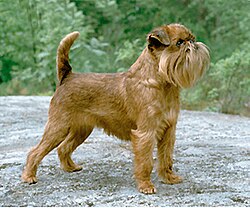
A tiny, almost human-faced toy dog with enormous expressive eyes and a bold personality. Brussels Griffons are confident, loyal companions that bond intensely with their favorite person.
Breed Ratings
Personality
Intelligence
4/5
Trainability
3/5
Playfulness
4/5
Energy Level
3/5
Social
Good with Kids
2/5
Good with Dogs
3/5
Good with Strangers
2/5
Lifestyle
Apartment Friendly
5/5
Exercise Needs
2/5
Watchdog Ability
4/5
Barking Level
3/5
Care
Shedding
2/5
Grooming Needs
3/5
Health Robustness
3/5
Where Are Brussels Griffons From?
Brussels Griffons started as ratters in Belgian stable yards during the 1800s before becoming fashionable companions among Belgian nobility. Their distinctive monkey-like face was refined through crosses with Pugs and English Toy Spaniels, giving them the expressive mug that makes them instantly recognizable.
What Is It Like Living With a Brussels Griffon?
Brussels Griffons have enormous personalities packed into tiny bodies. They’re bossy, opinionated, and convinced they’re much larger than their 8–10 pounds. They bond fiercely to one person and can be jealous of attention given to other pets or people. Despite the diva attitude, they’re surprisingly sensitive.
How Much Exercise Does a Brussels Griffon Need?
Exercise needs are modest: 20–30 minutes of walks and play daily. They’re excellent apartment dogs but terrible outdoor dogs — heat, cold, and rain are all deal-breakers for most Griffons. The rough-coated variety needs hand-stripping or regular trimming; smooth coats just need weekly brushing.
How Often Do You Need to Groom a Brussels Griffon?
Health concerns include respiratory issues (their short muzzle causes brachycephalic problems), luxating patellas, heart murmurs, and eye injuries due to their protruding eyes. They’re notoriously difficult to breed, with small litter sizes and frequent C-sections.
Are Brussels Griffons Healthy?
Brussels Griffons are perfect for singles or couples wanting a devoted lap dog with character. They’re not great with young children who might handle them roughly. Surprising fact: a Brussels Griffon played the role of Verdell in the movie “As Good as It Gets” with Jack Nicholson.
Our Honest Take on the Brussels Griffon
Brussels Griffons are velcro dogs with the personality of a tiny human and the airway of a Frenchie — charming, but the brachycephalic risks are real and routinely downplayed by breed enthusiasts.
Common Mistakes New Owners Make
- 1Assuming the smooth-coated variety has fewer breathing issues than the rough-coated. Both share the same flat-faced skull structure and BOAS rates of 30–40%.
- 2Skipping the patella check. Luxating patellas affect roughly 1 in 4 Griffons; surgery runs $1,500–$3,000 per knee.
- 3Crating them alone for 8+ hours. Griffons are notoriously prone to separation anxiety and will scream, not just whine — neighbors will complain.
- 4Buying from any breeder not screening for syringomyelia (SM). This neurological condition is rising in the breed and an MRI-cleared lineage costs more upfront but prevents $5,000+ in workups later.
Who Should Think Twice
Avoid this breed if you have toddlers (Griffons are fragile at 8–10 lbs and resent rough handling), if you work long hours away from home, if you live in a hot or humid climate without strong A/C, or if you can't tolerate a dog that follows you to the bathroom every single time. They are also stubborn and slow to housetrain — first-time owners expecting an easy small dog will be frustrated.
Real Costs in 2026
Brussels Griffon puppies from breeders doing patella, cardiac, and ideally MRI screening: $3,000–$5,500 in 2026. Annual costs including premium small-breed food ($35/month), grooming for rough coats ($60–$80 every 6–8 weeks), and routine vet care run $1,800–$2,800. Add pet insurance at $40–$60/month — a single BOAS soft palate surgery is $2,500–$5,000, and you will likely face one over the dog's lifetime.
Living With a Brussels Griffon: Year by Year
Griffon puppyhood is intense — these tiny dogs (8-10 pounds adult) are confident, bossy, and emotionally complex from week 8. They bond hard and fast, usually to one person, and many rescue Griffons never fully transfer that bond after rehoming. Adolescence is brief; most are recognizably adult by month 10. Prime adulthood (1-9) is when the breed's defining trait emerges: a small dog that thinks it is a person. Griffons sit on shoulders, demand to be at the dinner table, sulk visibly when ignored, and many develop precise personal preferences — specific blanket, specific sleeping position, specific human. The surprise that catches new owners is the separation anxiety: Griffons left alone for 8+ hours regularly develop screaming-vocalization anxiety that draws noise complaints in apartment buildings. Senior years are often shortened by brachycephalic complications and syringomyelia (a neurological condition rising in the breed); median lifespan is 12-14 but many decline rapidly between 9 and 11.
The Training Reality
Griffons are intelligent but not consistently trainable — Coren did not test the breed but anecdotal experience places them mid-pack. Housetraining is the breed's known weakness; many owners report 9-12 months of effort and some adults remain unreliable in unfamiliar homes. Marker training works with very high-value rewards and short sessions (5 minutes maximum). The realistic ceiling is solid house manners, sit/down/come on a leash, and a few tricks; agility is achievable for athletic dogs but conformation jumpwork strains the brachycephalic structure. The training pitfall is owner indulgence — Griffons are charming and most owners stop training around month 6 when 'they're so cute.' Untrained adult Griffons are demand-barkers, leash-pullers, and resource-guarders. The breakthrough is treating them as small dogs, not toys: same rules, same expectations, same consistency you'd use for a Border Collie. Skip harsh corrections; Griffons sulk for hours and may become avoidant of the offending handler permanently.
A Day in the Life
Morning is a 15-25 minute leashed walk at moderate pace; longer or hotter sessions trigger labored breathing fast. Daytime is spent following their person from room to room, demanding to be picked up roughly every 20 minutes, and napping pressed against the human's body. They snore at conversational volume and reverse-sneeze multiple times daily — both alarm new owners and are harmless. The rough coat needs hand-stripping twice yearly to maintain texture; clipped Griffons get a soft, fluffy, cotton-textured coat that mats. Smooth-coated Griffons shed moderately year-round. Most sleep 14-16 hours. Evening is another short walk plus an indoor play session. The quirk owners only discover after living with one: Griffons make eye contact in a way no other small breed does. They watch your face, track your gaze, and respond to subtle facial expressions like a great ape. They also become genuinely depressed when their person travels — appetite loss and lethargy lasting days.
How Brussels Griffons Compare to Similar Breeds
Compared to an Affenpinscher, Griffons are slightly larger, more affectionate, and substantially more bonded to one person; Affens are quirkier and more independent. Compared to a Pug, Griffons are more confident and more cognitively engaged but share most of the same brachycephalic risks; Pugs are more emotionally easy. Compared to a Cavalier King Charles Spaniel, Griffons are smaller, more reserved with strangers, and longer-coated; Cavaliers are gregarious and have severe mitral valve disease. Compared to a Pekingese, Griffons are more athletic and less stubborn; Pekes are more dignified and less velcro. If you want the personality without the airway risk, a Lowchen or Havanese delivers similar intelligence and bond intensity in a non-brachycephalic skull.
Great For
- Apartment living
- Allergy-conscious homes
- Home security
Think Twice If
- You have young children
- You have frequent guests
Are Brussels Griffons Prone to Health Issues?
Brussels Griffons are predisposed to: patellar luxation, hip dysplasia, eye problems, respiratory issues. Regular vet visits and a healthy diet help prevent common issues.
Health Robustness
3/5
How Much Does a Brussels Griffon Cost?
Purchase Price
$1,500–$3,000
Monthly Food
$25
Annual Vet
$500
Annual Grooming
$200
Est. First Year
~$3,250
Est. Annual
~$1,000
Recommended Gear
Affiliate disclosure: The links below are affiliate links. As an Amazon Associate, we earn a commission from qualifying purchases at no extra cost to you. This never influences which products we recommend.
Best For
Compare Brussels Griffon
Related Breeds
Other Toy breeds you might like


Frequently Asked Questions
How much does a Brussels Griffon cost?
A Brussels Griffon puppy typically costs $1,500–$3,000. The estimated first-year cost including food, vet visits, and grooming is around $3,250, with ongoing annual costs of approximately $1,000.
How long do Brussels Griffons live?
Brussels Griffons have an average lifespan of 12 to 15 years. Common health concerns include patellar luxation, hip dysplasia, eye problems, respiratory issues.
Are Brussels Griffons good with kids?
Brussels Griffons score 2/5 for being good with children. They may not be the best choice for families with young children and require careful supervision.
Do Brussels Griffons shed a lot?
Brussels Griffons have a shedding level of 2/5. They are relatively low shedders but still need occasional grooming.
Are Brussels Griffons good for apartments?
Brussels Griffons score 5/5 for apartment friendliness. They adapt very well to apartment living and don't require a large yard.